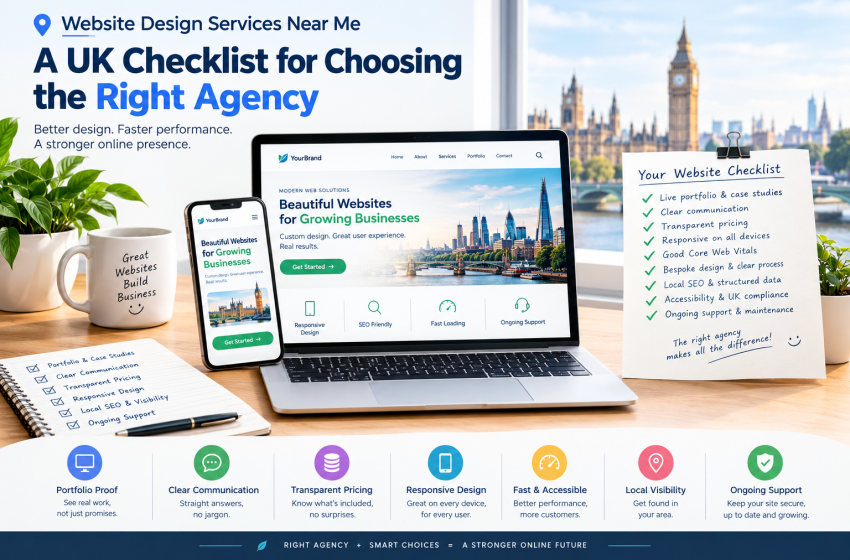
‘Any website is better than no website.’ It is a comforting thought, and it is wrong. A slow, confusing or outdated site can do more harm than good, because it tells potential customers that your business may be just as hard to deal with. The good news is that choosing the right design partner is far easier when you know what to look for.
So before you shortlist anyone, let us build a practical checklist you can use today. Whether you are launching a first site or planning a redesign, these are the questions that separate a dependable agency from an expensive disappointment.
What to Look for When Searching Website Design Services Near Me
A search for ‘website design services near me’ returns hundreds of options, and most promise the same things. The real differences show up when you look closely at evidence, communication and clarity.
Portfolio Proof, Not Promises
Start with real work. A trustworthy agency will happily show you live websites and explain the thinking behind them. Browse our project gallery and our detailed case studies to see the kind of detail you should expect from anyone you hire.
Clear Communication From the Very First Call
Notice how quickly an agency replies, whether they ask about your customers and goals, and whether they explain things without drowning you in jargon. The way they behave before you sign is usually the way they behave afterwards.
Transparent Pricing
Vague quotes lead to surprises. Look for a clear breakdown of design, development, content and support. You can see how we present our packages on our pricing plan page, and we are always happy to tailor a quote to your exact requirements.
Why Responsive Website Design Services Should Be Non-Negotiable
Most agencies now say their sites are responsive, but quality varies wildly. A site can technically fit on a phone screen and still be frustrating to use.
Test Responsiveness Like a Customer
Open an agency’s portfolio on your own phone and run a few simple checks before you ever speak to them.
Can You Tap Everything Easily?
Buttons and links should be large enough for a thumb, with space between them. If you keep hitting the wrong item, real customers will too.
Is the Text Readable Without Zooming?
Body text should be comfortable at normal size, with good contrast against the background. Tiny, cramped copy is a warning sign.
Do Forms Work Smoothly?
Contact and checkout forms should be short, clearly labelled and easy to complete on a small screen. Awkward forms are one of the biggest hidden causes of lost enquiries.
Core Web Vitals in Plain English
Google measures real-world page experience through Core Web Vitals, which look at how quickly the main content loads, how fast the page responds to taps and how stable the layout is while loading. You can run a free check on any page using PageSpeed Insights. Try it on an agency’s own site and on their portfolio pieces. If their showcase work struggles, yours may too.
Bespoke Web Design UK: How a Well-Run Project Unfolds
If you are investing in bespoke web design, you should know the journey before it begins. Our own process is built around four clear stages, and a good agency will be able to describe theirs just as plainly.
Stage One: Info Gathering
We begin by learning about your business, customers, competitors and goals. Skipping this step is the fastest route to a good-looking site that misses the point.
What We Will Ask You
Expect questions about who your best customers are, what makes you different, which pages you need and how you currently win work. The more honest your answers, the sharper the result.
Stage Two: Idea Planning
Next comes structure: page hierarchy, content plans and wireframes. This is where we agree how visitors will move through the site, long before colours and fonts enter the picture.
Stage Three: Design Analysis
With the plan agreed, we create and refine the visual design, checking it against usability, brand and responsiveness. Feedback at this stage is welcome and saves time later.
Stage Four: Testing and Launch
Before going live, we test across devices and browsers, check forms, speed and links, and prepare everything for a smooth launch. If you are moving from an old platform, our website migration services protect your existing content and rankings during the switch.
Local Visibility: Helping Nearby Customers Find You
Great design is only useful if people can find it. For businesses serving a specific area, local visibility deserves its own plan.
Structured Data for Local Businesses
Adding structured data helps search engines understand your business name, address, opening hours and services. Google explains the format in its guide to local business structured data, and it is something we consider during build.
Content That Reflects Where You Work
Service pages that mention the areas you cover, genuine customer reviews and consistent contact details all support local rankings. Pairing your build with ongoing search engine optimization keeps that momentum going after launch.
UK Basics Every Business Website Should Cover
Accessibility and the Equality Act
UK businesses have duties to avoid discriminating against disabled people, and that can include how they provide services online. The government’s Equality Act 2010 guidance is a useful starting point, and a considerate agency will build accessibility into your design rather than treating it as an extra.
Usability Fundamentals
Usability is about making things easy, not just attractive. The Nielsen Norman Group’s overview of usability basics is a helpful read if you want to judge whether a design genuinely works for people.
Sector Examples: What Good Looks Like in Practice
Different industries need different strengths. Our Restaurants Near Me project focuses on helping hungry visitors find options quickly, while Technology News UK is built for fast-moving content and easy reading. For trades and contractors, our web design for construction companies service tells your story with authority, and the MPM Mechanical Services case study shows it in action.
Questions to Ask Before You Sign
Take this list into every conversation. The answers will tell you far more than a polished sales pitch.
- Can I see live examples of similar projects?
- Who will actually work on my website, and who will be my contact?
- What is included in the price, and what costs extra?
- How will you handle mobile design, speed and accessibility?
- What happens after launch regarding support, updates and hosting?
The last point matters more than people expect. Ask about website maintenance and hosting and domain services up front so there are no surprises later.
Let’s Talk About Your Website
Choosing a design partner should feel exciting, not stressful. If this checklist has helped, the next step is a conversation. Our team of 23+ specialists has delivered 749+ new websites for UK and global clients, and we would love to hear about your project. Book your free, no-obligation consultation and we will respond within one working day.
One last thing: which item on this checklist surprised you most? Tell us in the comments, because your answer might shape our next guide.
Frequently Asked Questions
1. What should I look for in website design services near me?
Look for a visible portfolio, clear communication, transparent pricing and a defined process from planning to launch. Also check that the agency builds responsive, fast and accessible websites and offers support after launch.
2. Are responsive website design services really necessary?
Yes. Customers browse on phones, tablets and desktops, and search engines primarily use the mobile version of pages for ranking. A responsive website ensures a smooth experience everywhere, which supports both enquiries and visibility.
3. How does bespoke web design in the UK differ from using a template?
Bespoke web design creates a site specifically for your brand, audience and goals, while templates adapt a ready-made layout. Custom builds usually offer better flexibility, performance and brand distinction.
4. What does a typical website design process involve?
A typical process includes information gathering, idea planning, design refinement, and testing and launch. Good agencies explain each stage clearly and involve you in feedback along the way.
5. Do I need a local agency, or can I work with one remotely?
Both can work well. A local or UK-based agency can offer easier meetings and market knowledge, but what matters most is relevant experience, clear communication and a track record you can verify.