It is 11pm, you have fourteen browser tabs open, and every agency website you visit promises “stunning, bespoke, results-driven” design. By tab fifteen they all blur together. Sound familiar? Choosing a web design services agency should not feel like guesswork, yet most business owners make the decision on gut feeling and a nice-looking portfolio.
This guide is the friendly, jargon-free version of what we wish every buyer knew before signing a contract. We will walk through what an agency really does, why custom web page design in the UK beats a recycled template, whether searching for a “web developer near me” is worth the effort, and which questions separate the professionals from the pretenders. Grab a brew and let’s get into it.
What a Web Design Services Agency Actually Does (and What You Should Expect)
A good agency does far more than “make things look pretty”. Think of it as a small, specialised team that plugs into your business: strategists, designers, developers, SEO specialists and content writers working towards one goal, which is turning visitors into enquiries and sales.
Strategy, Design, Development and Growth Under One Roof
The biggest advantage of working with an agency rather than a one-person band is joined-up thinking. Your design decisions inform your SEO, your SEO informs your content, and your development choices keep everything fast. Here is how a well-run project usually breaks down.
Discovery and Planning
Before a single pixel is placed, the team should ask about your customers, competitors, goals and budget. If an agency jumps straight to mock-ups, be cautious. Discovery is where you save money, because it prevents expensive changes later.
Design and User Experience
This is where your brand personality meets usability. Navigation, page layouts, calls to action and mobile behaviour are all mapped out so visitors find what they need within a few seconds.
Build, Testing and Launch
Developers turn the approved designs into a working site, then test it across browsers and devices. A professional web development team will also check speed, security and forms before anything goes live.
Agency vs Freelancer vs DIY Website Builder
DIY builders are fine for a simple side project. Freelancers can be brilliant but may struggle to cover design, code, SEO and support on their own. An agency costs more upfront, but you get a team, a process and continuity if someone is on holiday or moves on. For a business that relies on its website to generate revenue, that safety net matters.
Why Custom Web Page Design in the UK Beats a Template Every Time
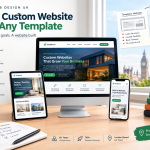
Templates are tempting because they are quick and cheap. The catch is that thousands of other businesses are using the same layout, the same bloated code and the same stock-looking structure. Custom web page design in the UK is about building around your customers rather than squeezing your customers into someone else’s layout.
A Brand Identity That Cannot Be Copied
Your website is often the first impression people have of you. Custom design lets your tone of voice, colours, photography and messaging come through consistently, which builds trust before anyone picks up the phone. Browse a few projects in our case studies and you will see how different each build looks, because each one started with a different brand.
Performance You Can Measure
Speed and stability are not nice-to-haves any more. Google measures them through Core Web Vitals, a set of signals covering loading, interactivity and visual stability. Templates often ship with unused scripts that drag these scores down.
Faster Loading Pages
Custom builds only load what the page needs. That means compressed images, clean code and no mystery plugins slowing things down, and visitors who stay instead of hitting the back button.
Mobile-First Layouts
Most UK web traffic now arrives on a phone. A custom design treats mobile as the starting point, with thumb-friendly buttons, readable text and short forms, rather than shrinking a desktop layout and hoping for the best.
SEO Foundations Built In From Day One
Clean heading structure, logical URLs, fast pages and proper schema are far easier to include at the design stage than to bolt on later. If you want to understand how search engines read your pages, Google’s own Search Central documentation is a great starting point, and our search engine optimization team can handle the heavy lifting for you.
Accessibility and Compliance
A site that everyone can use is better for people and better for business. Following the Web Content Accessibility Guidelines (WCAG) means sensible colour contrast, keyboard-friendly navigation and clear labels, all of which also help your usability and SEO.
Web Developer Near Me: Does Location Really Matter?
Millions of people type “web developer near me” into Google every year, and there is a good reason. Many business owners simply feel more comfortable with someone they can meet. But is local always better? The honest answer is: it depends.
The Real Benefits of Choosing a Local Team
A UK-based team understands UK consumer habits, regulations such as GDPR and cookie consent, and the way local customers search. Being in the same time zone also means faster replies and easier meetings. Our studio sits in Covent Garden, London, and we regularly work with clients who prefer a face-to-face workshop at kick-off.
When a Remote Agency Works Just as Well
If your agency communicates clearly, shares progress regularly and has a proven track record, distance becomes much less important. Video calls, shared project boards and staging sites make remote collaboration smooth.
How to Tell If an Agency Is Genuinely Local
Check for a real address, a UK phone number and a Google Business Profile with genuine reviews. If you are a local business yourself, setting up your own profile is one of the quickest wins for showing up in “near me” searches.
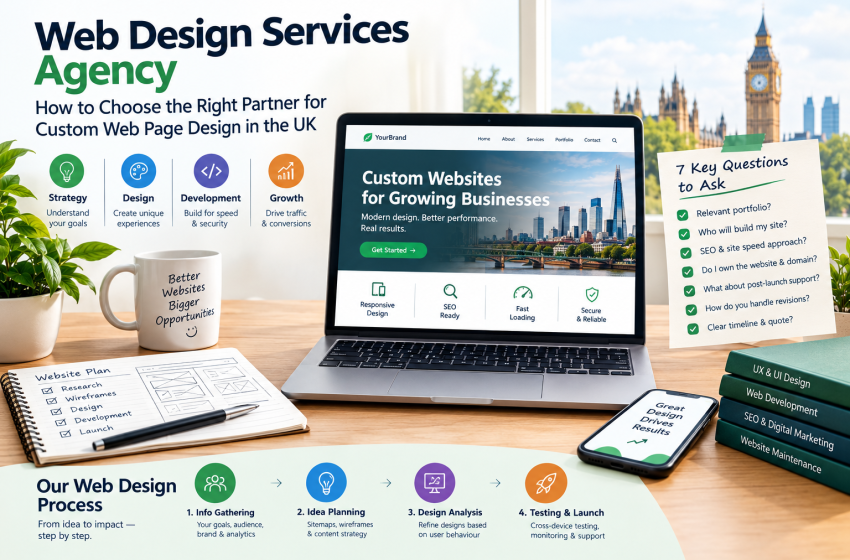
Seven Questions to Ask Before You Hire a Web Design Agency
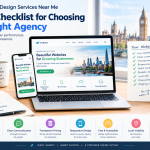
Use this checklist on your next discovery call. The answers tell you far more than a polished sales deck.
- Can I see recent work in my industry, or in a similar one?
- Who will actually build my website, and who is my day-to-day contact?
- How do you approach SEO and site speed during the build?
- Will I own the website, domain and content when the project ends?
- What happens after launch? Do you offer website maintenance and support?
- How do you handle revisions, and how many rounds are included?
- Can you give me a clear timeline and a transparent quote?
What a Good Web Design Process Looks Like
Every agency has its own flavour, but the best processes share the same four stages. Ours looks like this.
Step 1: Info Gathering
We collect your goals, audience details, brand assets and any existing analytics. If you are replacing an old site, we also plan the move carefully through our website migration services so you do not lose rankings.
Step 2: Idea Planning
Sitemaps, wireframes and content plans come next. This is the stage to share ideas, argue about the homepage and settle on how visitors will move from first click to enquiry.
Step 3: Design Analysis
Designs are reviewed against real user behaviour and your business goals, then refined. Nothing is built until you are happy with how it looks and feels.
Step 4: Testing and Launch
Everything is tested across devices, speeds and browsers. After launch, we monitor performance and can look after your hosting and domain services so you have one team to call if anything needs attention.
Choosing the Right Platform for Your Goals
The best platform is the one that suits your goals, not the one that is trendiest. Here is a quick guide.
Content-Led Business Sites
If you publish articles, update pages often or want full control, a flexible CMS is a great fit. Our WordPress development services give marketing teams the freedom to edit content without calling a developer.
Online Shops
Selling products? Take a look at our ecommerce development options, including Shopify development for fast setups and WooCommerce web development for fully customised stores.
Sector-Specific Websites
Some industries need specialist layouts and lead-generation features. For example, our web design for construction companies focuses on project galleries, quote forms and trust signals that contractors need.
A Quick Word on Sustainable Web Design
More UK buyers now ask whether their agency is a sustainable web design agency. The good news is that leaner, greener websites are also faster, cheaper to host and better for SEO. Ask your agency about optimised images, efficient code and eco-friendly hosting. It is a conversation worth having early in the project.
Budget and Value: What Should You Expect to Pay?
Pricing varies widely, and the cheapest quote is rarely the best value. What matters is what is included: design, development, SEO set-up, training, testing and support. You can review our packages on the pricing plan page, or ask for a tailored quote based on your pages and features.
Ready to Build a Website That Works as Hard as You Do?
Choosing a web design services agency is one of the most important marketing decisions you will make this year. Look for a team that listens first, designs around your customers, builds for speed and stays with you after launch. With 749+ websites delivered and a team of 23+ specialists, we would love to talk through your project. Learn more about us, browse our projects, or book a free consultation and we will respond within one working day.
Over to you: what is the one thing your current website does not do that you wish it did? Tell us in the comments, or drop us a message and we will point you in the right direction.
Frequently Asked Questions
1. What does a web design services agency do?
A web design services agency plans, designs, builds and maintains websites for businesses. A full-service team typically covers strategy, UX design, development, SEO, content and ongoing support, so everything works together to attract visitors and generate enquiries.
2. Why choose custom web page design in the UK instead of a template?
Custom design gives you a unique brand identity, faster page speeds, cleaner code and SEO foundations built around your goals. Templates are cheaper upfront but often carry unnecessary code, look similar to other sites and are harder to scale.
3. How do I find a reliable web developer near me?
Search for local developers, then check for a real UK address, recent case studies, genuine reviews and a clear process. Ask who will work on your project and what support is included after launch. Remote agencies can work well too if communication is strong.
4. How long does it take to build a custom website?
A standard business website can often be completed within a few weeks, while larger eCommerce or highly custom projects need more time. Your timeline depends on the number of pages, features, and how quickly feedback and content are supplied.
5. How much does professional web design cost?
Cost depends on design complexity, functionality, number of pages and integrations. Rather than choosing the lowest quote, compare what is included, such as SEO set-up, testing, training and support, and request a tailored quotation.