Picture this: a small business owner in Manchester pays £2,800 for a “custom” website, only to discover six months later that it’s a barely-modified template, it’s invisible on Google, and the agency that built it has stopped answering emails. This scenario plays out more often than most people realise, and it’s exactly why so many business owners approach web design with a mix of excitement and dread. They know they need a strong online presence, but they’ve heard enough horror stories to be wary of who they hand their money to.
The good news is that finding trusted web designers isn’t guesswork once you know what to look for. This guide breaks down exactly how to separate genuine expertise from empty promises, how to understand what “affordable” really means in this industry, and how to make a confident decision the first time round.
The Real Cost of Getting Web Design Wrong
Before comparing quotes, it helps to understand what’s actually at stake. A website isn’t a one-off purchase like a laptop or a delivery van — it’s an ongoing sales and marketing asset. When it’s built poorly, the damage compounds over time.
When “Cheap” Becomes Expensive
A website that loads slowly, looks dated on mobile, or has no clear path to contact you will quietly cost you customers every single day, even if nobody ever tells you. Rebuilding a broken site later almost always costs more than doing it properly the first time, because you’re paying twice: once for the mistake and once for the fix.
The Trust Gap Between Freelancers and Agencies
Freelancers can be brilliant, but a single point of failure is risky — if they get busy, move on, or stop responding, your project (and your business) is left exposed. An established agency spreads that risk across a team of designers, developers, and project managers, which is one reason so many UK businesses now specifically search for a website design agency in UK rather than an individual contractor.
What Does “Affordable” Actually Mean in Web Design?
“Affordable” is one of the most misused words in this industry, and it means very different things depending on who’s saying it.
Hidden Costs That Inflate a “Budget” Website
A low headline price often hides extra charges for stock images, extra revisions, hosting setup, SSL certificates, or even publishing the finished site. An affordable web design agency worth its name will show you the full picture upfront — design, build, testing, and launch — rather than drip-feeding costs after you’ve already committed.
Value vs. Price: Two Different Conversations
Price is what you pay; value is what you get back. A £1,200 website that generates five enquiries a month is worth far more than a £600 website that generates none. When you’re comparing quotes, ask what each package actually includes in terms of pages, functionality, and support, rather than just looking at the number at the bottom.
Questions to Ask Before You Compare Quotes
- Does the price include mobile optimisation and basic on-page SEO, or are these extras?
- How many rounds of design revisions are included?
- Who owns the finished website and its code once it’s built?
- What happens after launch — is there a maintenance plan, and what does it cost?
- Is hosting included, or will you need separate hosting and domain services?
How to Spot Trusted Web Designers Before You Sign Anything
Trust isn’t something an agency can simply claim — it has to be demonstrated through evidence you can actually check.
Portfolio and Case Studies Tell the Real Story
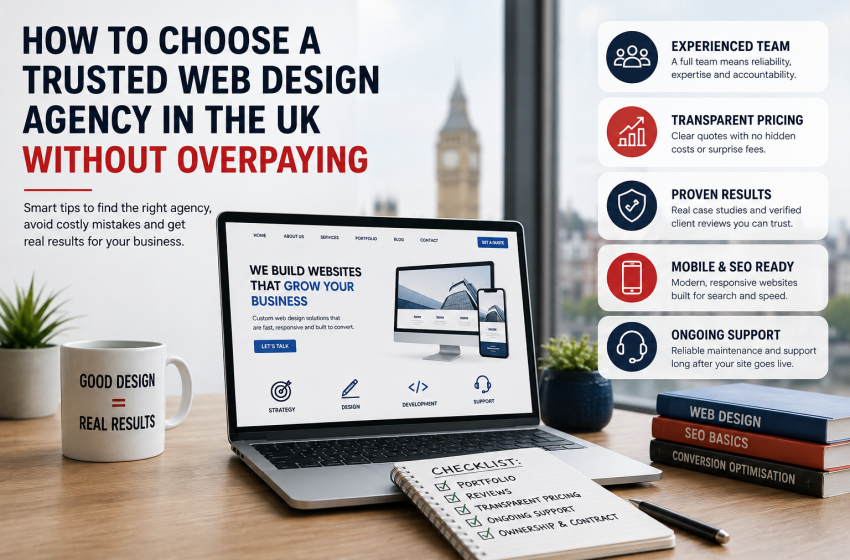
Ask to see finished, live websites rather than mockups, and actually click through them on your phone. A genuine studio will happily point you to its case studies and walk you through the thinking behind specific projects, not just show you a gallery of pretty screenshots.
Reviews, Reputation and Red Flags
Independent review platforms such as Clutch let you see verified client feedback, including project budgets and satisfaction scores, which is far more reliable than testimonials curated by the agency itself. Look for consistency across multiple sources rather than a handful of five-star reviews that all sound suspiciously similar.
Five Warning Signs to Walk Away From
- Pressure to pay the full amount upfront before any work begins.
- No written contract outlining deliverables, timelines, and ownership.
- An unwillingness to share past client contacts or live examples.
- Vague answers when you ask about post-launch support.
- Prices that seem too good to be true with no explanation of what’s excluded.
Why London Businesses Need Website Developers Who Understand the Local Market
If you’re operating in a competitive city, generic advice only gets you so far. Working with website developers in London who understand the local commercial landscape gives you a genuine edge.
Local SEO Isn’t Optional Anymore
Customers searching for services “near me” expect to find relevant, locally optimised businesses at the top of their results. Agencies experienced with London-based clients understand how to structure a site for local search, including location pages, schema markup, and Google Business Profile alignment — services often bundled into broader search engine optimisation packages.
Compliance, Accessibility and UK Regulations
UK businesses have specific obligations around data protection and cookie consent that agencies unfamiliar with the market sometimes overlook. Following the ICO’s guidance on UK GDPR isn’t just good practice — it protects you from fines and reputational damage further down the line.
Choosing a Website Design Agency in the UK: A Practical Checklist
By this point you should have a clearer sense of what separates the trustworthy from the merely persuasive. Here’s how to turn that into a decision.
Step 1 – Define the Outcome, Not the Features
Instead of starting with “I need a homepage, an about page, and a contact form,” start with “I need to generate 20 qualified enquiries a month.” Outcomes guide better conversations than feature lists, and a capable agency will translate that goal into the right structure, whether that’s a lead-generation site, a full eCommerce development build, or something in between.
Step 2 – Shortlist Based on Process, Not Just Price
Ask each agency to describe their process from first call to launch. A considered, structured answer — discovery, wireframes, design, build, testing, launch, support — is a far stronger signal than a rock-bottom quote with no explanation of how they’ll get you there.
Step 3 – Ask About Ongoing Support
Websites need updates, security patches, and occasional content changes long after launch. Confirm whether website maintenance is available as an ongoing service, and what it costs, before you sign anything.
A Simple Comparison Table You Can Use
What to Check | Low-Quality Signal | Trusted Signal |
Portfolio | Screenshots only, no live links | Live sites you can click through |
Pricing | One number, no breakdown | Itemised quote with inclusions listed |
Reviews | Only on their own site | Verified on independent platforms |
Contract | Verbal agreement | Written scope, timeline, and ownership terms |
Support | “We’ll sort it if needed” | Clearly defined maintenance plan |
What Great Websites Design Actually Looks Like in 2026
Design trends move quickly, but a few fundamentals have become non-negotiable for any business serious about converting visitors into customers.
Mobile-First Is the Baseline, Not a Bonus
The majority of UK web traffic now happens on phones, so websites design decisions should start with the smallest screen and scale up, not the other way around. A desktop-first site that’s merely “responsive” often feels clunky on mobile, with awkward tap targets and slow load times.
Speed, Accessibility and Conversion Work Together
Research from the Nielsen Norman Group consistently shows that usability and clear visual hierarchy directly influence whether visitors stay or leave within seconds. Fast-loading pages, readable typography, and accessible colour contrast aren’t just nice-to-haves — they’re the difference between a visitor converting or bouncing straight back to the search results.
Ready to Work With Web Designers You Can Actually Trust?
Choosing the right partner for your website is one of the most consequential decisions you’ll make for your business’s growth, and it deserves more scrutiny than a five-minute Google search. Take the checklist above, apply it to your shortlist, and don’t be afraid to ask uncomfortable questions before you commit any money.
If you’d rather skip the guesswork, take a look at our pricing plan, browse our projects, or simply get in touch and tell us what you’re trying to achieve. We’ll give you a straight answer, not a sales pitch.
Frequently Asked Questions
- How do I know if a web design agency in the UK is actually trustworthy? Check for a live, clickable portfolio, verifiable reviews on independent platforms, a written contract outlining ownership and deliverables, and a clear explanation of post-launch support. Agencies that hesitate to provide any of these are worth approaching with caution.
- What does an affordable web design agency typically charge for a small business website? Costs vary depending on functionality, but a straightforward business website in the UK generally starts in the low thousands, while more complex eCommerce or custom-built sites cost more. The key is understanding exactly what’s included before comparing prices.
- Why should I choose website developers in London specifically? Developers familiar with the London market understand local search behaviour, competitive industries, and UK-specific compliance requirements, which can give your site a practical advantage over one built by a team unfamiliar with the local landscape.
- Is a cheaper website always a false economy? Not always, but a very low price often means corners are cut somewhere — whether that’s SEO, mobile optimisation, ongoing support, or design quality. It’s worth asking what’s excluded before assuming a lower price is automatically a better deal.
- How long does it typically take to design and launch a new website? A standard business website is often completed within a few weeks, while larger or more custom builds, such as eCommerce platforms, can take longer depending on the scope and number of features required.